
Ms Nuraan Arendse · Showroom host
Void fill that stops rattles
Dispatch packing that survives the van.
Rattles and the South African Floor Problem
Plant managers and station owners across Gauteng and KZN waste hours each month dealing with returns, all because cartons arrive with something loose inside. On a Germiston or Umbilo floor, that’s often not down to lazy packing, but to the shape of SA haulage. Bakkie trays, contract vans, and those last few metres from mall delivery bay to trade counter all combine sharp shocks and vibration. The final culprit: uneven floors and potholes, which make loosely filled boxes rattle no matter how neat your packer is.
Packaging that works at Boardwalk or in the Highveld yard needs more than just bubble wrap. With power-cut delays, extra cycles in storage, and temperature shifts, fillers that failed in the 2000km from Jozi to Cape Town can mean cracked ABS, scratched acrylic, or just an unhappy customer. Void fill needs to lock parts in place from the moment your kit leaves the bench until the box gets cut open at the install.
Method: Void Fill for SA Trade Kits
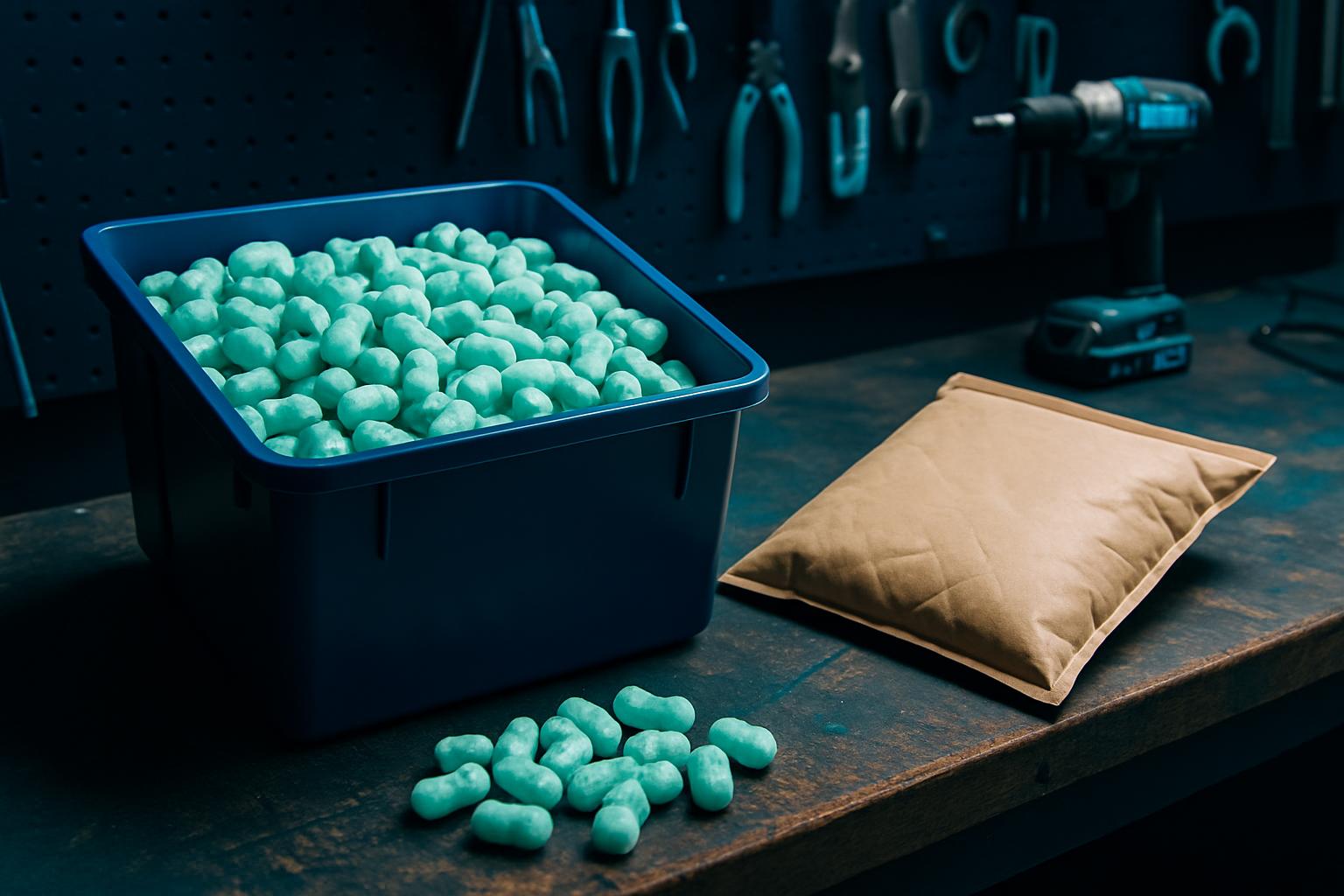
There are three main categories of void fill for machines, flats, and bench starter kits: paper scrunch, air pillows, and crosslinked foam blocks. Each has a right use. If you’re sending a CNC Care Bit Box to a Pietermaritzburg FET or a small order of DTF station spares to Menlyn, light but tightly packed crumpled paper can absorb the van’s shaking. For multi-part aluminium rails, foam blocks at corners keep weight from collapsing your box even in the lowveld heat.
Never leave more than 4cm clear space loose in any axis. Once you tape a box, give it a hard shake. If any part moves, use offcut foam, extra paper, or expand a pillow. Avoid loose polystyrene balls in coastal shops, they attract humidity and break down, getting everywhere. Fit and tape are as important as fill: high-tack tape after void fill, always. No one wants to see their spares slide out the corner by mistake.
- Paper scrunch, for light, non-delicate contents; recyclable, fast to pack
- Air pillows, for uniform voids in larger boxes, but sensitive to temperature swings
- Crosslinked foam blocks, best for CNC, sharp corners, station tools
What to Record and Why It Matters
Every despatch should log the fill method, fill amount (e.g. full/no movement or partial), and packer initials on a bench slip. This makes it simple to track which method holds up over the route to Riverside or Tyger Valley. It’s easy to forget: the quiet weeks in August and September at Sunnyrock always show less damage simply because your route’s drier and the road’s less churned. But if you’re not writing it down, you can’t prove it, or fix a weak point.
At ByThis we recommend keeping a simple table: day, content, fill type, route, and condition-on-arrival if possible (even just a short note from the receiving tech through our contact form is useful). You’ll learn which fill breaks down in the Durban humidity and which makes it through Gauteng potholes without issues.
Worked Example: Packing a Care Bit Box for FET Delivery
Suppose you're packing five Care Bit Boxes for a CNC short course in Springs, needed by Friday. After checking your carton size, you add a base layer of crumpled kraft paper, folded, not just stuffed. Each bit box is separated by a foam block, cut to size from your CNC offcuts. There’s about 2cm at all sides, so two strips of crosslinked foam hold the rows steady without damaging the plastic latches.
Once you close and tape up the box, give it a hard shake. If nothing moves, label the fill as ‘full/no movement’ and initial your pack sheet. You jot down that you had to double the foam where stock was short, a lot of teams miss that step when stocks run low. When the van gets stuck at a Sunnyrock yard power-cut slot, nothing shifts or cracks, and it opens neat at the destination.
Ask Sunnyrock for a shortlist
Name the job on the floor and the city. We answer from Germiston with vinyl, laser, CNC or DTF picks that fit.