
Briefs
Shared trays that return full
Education foam that survives shared hands.
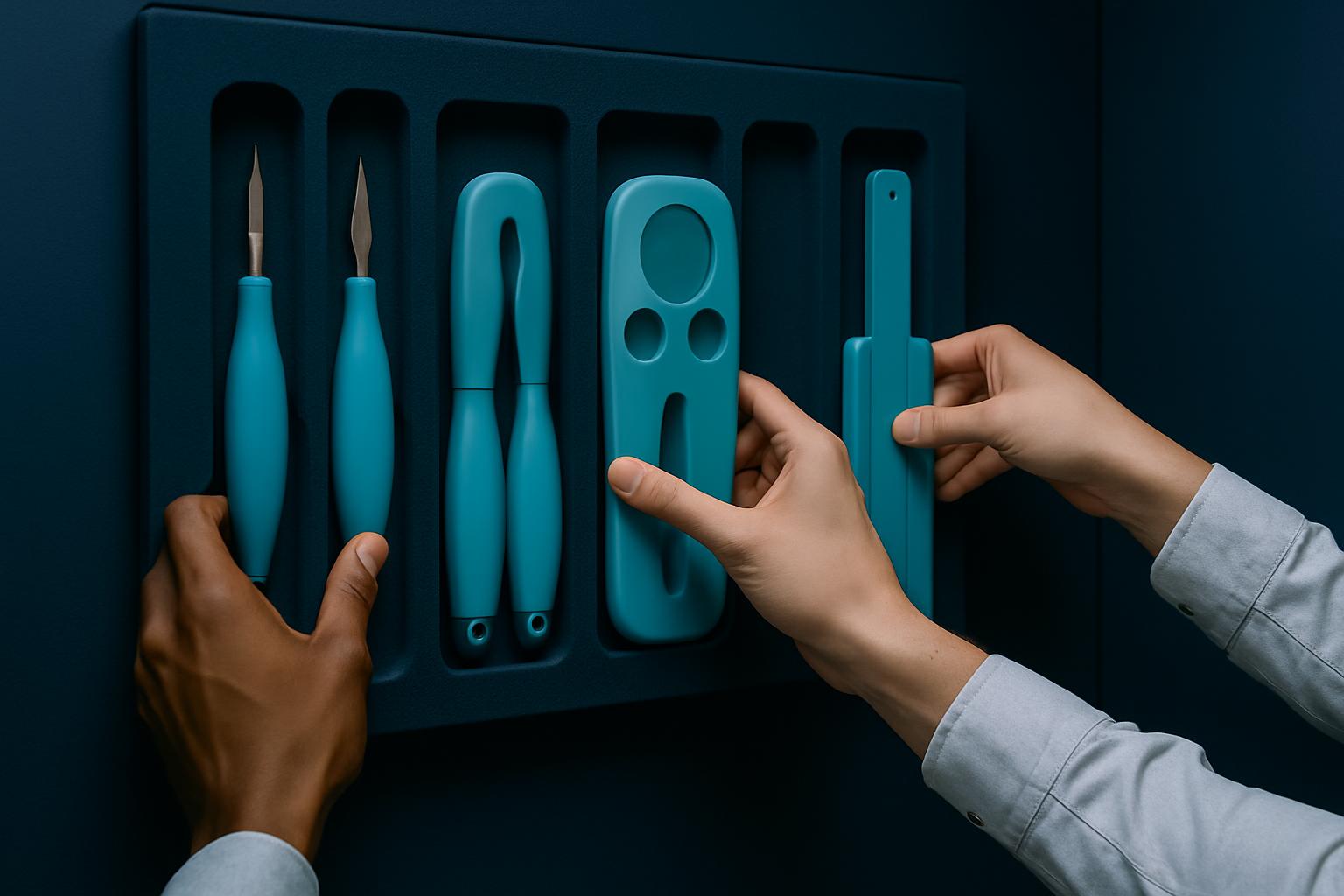
Why Shared Trays Lose Their Edge
In South African FET college benches and mall trade bays, shared tool trays are touched by dozens of hands daily. Foam inserts and holders, if poorly chosen, start tearing or warping within weeks. It’s not just about wear, Highveld dust in places like Germiston settles in open trays, while coastal humidity at Gateway and Boardwalk pulls at adhesives and softens cheap foams. The result? Trays that stop returning complete, with inserts missing or tatty, and you’re always chasing replacements. For benches with shifting classes, reliably full trays can mean the difference between a finished batch and a stalled session.
Foam Kit Choices Built for Real SA Use
There's no sense in buying catalogue foam for the sake of it. ByThis only picks inserts proven in FET workshops, dense, closed-cell foam that shrugs off grubby fingers and the odd nail or spanner. We’ve trialled foam thicknesses (15 mm for laser, 30 mm for heavy cutters) in mall trade bays from Tyger Valley to Riverside, keeping one eye on week-long usage, not showroom gloss. All shared trays come in neutral grey to hide marks, not distract teams. Each foam cut is designed for a standard 450 mm or 600 mm tray, sized for typical shared benches.
Our picks avoid stick-on labels, which just peel off in SA humidity. Instead, laser-etched markings last the year out. And for everyday plant use, foam density is matched to the weight of what's being stored, no one wants saggy holders by second term.
Managing Trays for Repeatable Returns
Method is half the battle. Shared trays work if your team rotates them on a posted schedule, not on the fly. Mark each tray with a number and assign its return time on a visible whiteboard. At a Germiston FET college, we saw every tray logged with a simple date and signature each handover, it’s quick and everyone knows who had what. Rotation by day, plus straight-emptying at closing, stops hidden clutter. At Cresta and Menlyn, plant buyers find you avoid drama just by spending five minutes double-checking foam slots before class swaps.
You don’t have to be fussy: just write down what’s supposed to be there and set one person per week to check the lot. Over time, trays come back full without fuss.
- Keep foam dry and out of direct sun when not in use
- Wipe trays biweekly with a damp cloth to remove Highveld grime
- Train every new team member on sign-in and sign-out routine
Short Example: A Week in a Mall Workshop
Take a 12-seat trade bay at Tyger Valley Mall. Monday the foams go in, holding 8 drivers, 6 pliers, and a ruler in each tray. By midweek, a workshop lead checks trays against the printout list. On Thursday, a set goes missing a plier, it’s noticed at sign-out, logged, and replaced from the central kit. Week’s end, every tray is wiped down, and the foam has held its shape. Over three months, replacement dropped to just two items, before, a lot was lost every week. That’s why the right kit and one steady method make shared trays last, returning full year-round.
Book a showroom look
Write through our contact form with the showroom city and the kit family you want to see on the bench.