
Gideon Odendaal · CNC First Kits Lead
Crease without cracking stock
Bone folders and crease boards that behave on South African floors.
Why stock cracks: the real problem South Africans see
Any print or finishing bay near the Highveld picks up this problem: card or board that cracks when folded sharply, with fibres breaking and that ugly lightning line showing through dark print. It’s a daily issue in Germiston and any FET workshop prepping presentation folders or tent cards for Cresta or Tyger Valley stores. Most times, it’s not just the stock.
Add in supply swings, local SRA3 doesn’t always match what your customer’s designer expects straight from a Cape mall kiosk. Even quality brands will perform differently depending on storage spots: a pallet left by the loading dock at Sunnyrock Trade Yard for just one afternoon will act different to the bundle brought straight in from a closed storeroom.
Method: tools and habits that make the difference
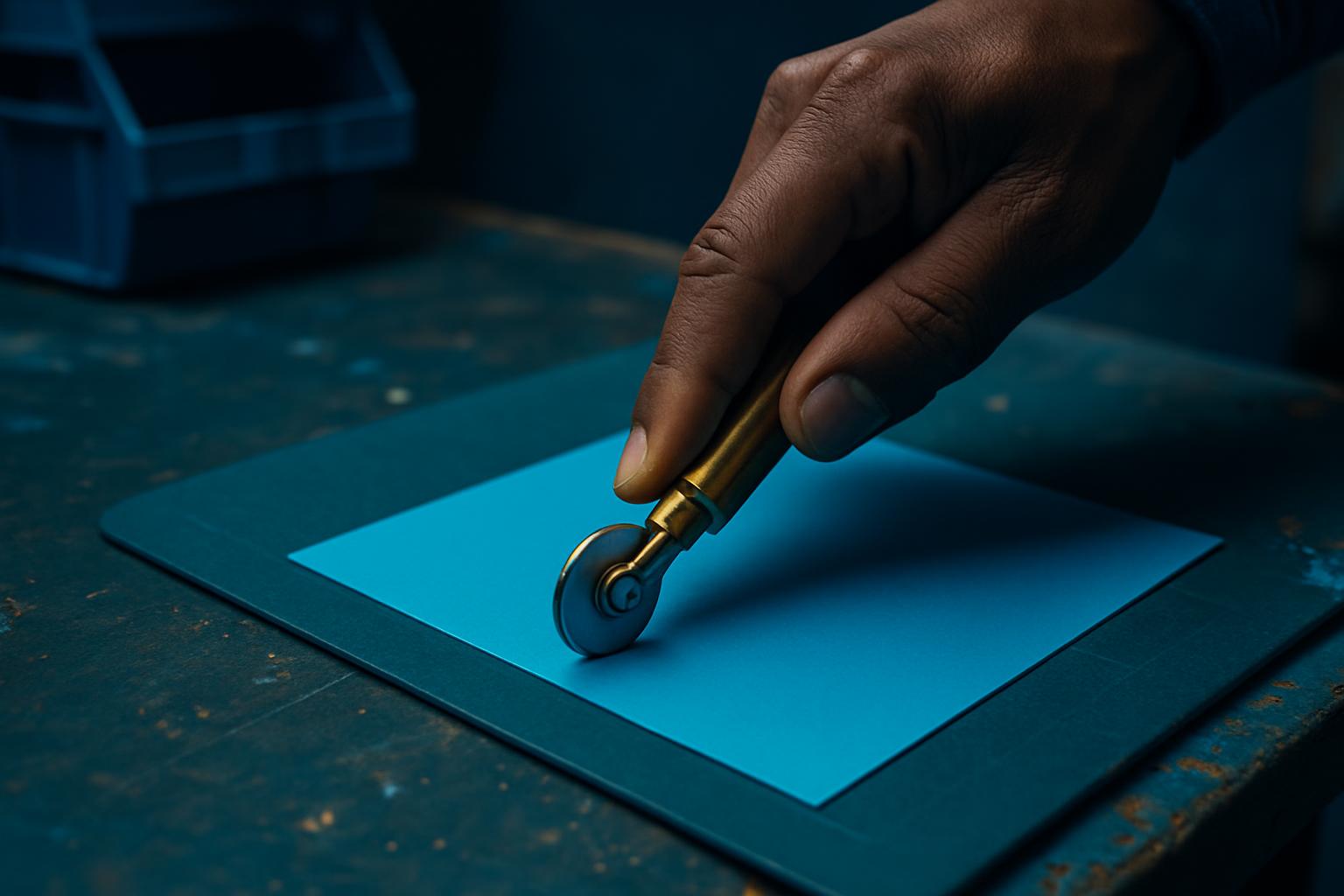
The real fix starts with a crease that compresses, not slices. A Teflon bone folder doesn’t scuff as badly as plastic on a coated board, and a proper hardboard-backed crease board (not whatever’s leftover or soft cutting mat) gives you a proper score line. Try running a double-crease on heavier stock, especially anything over 300 gsm. For kits, the Pop-Up Bundle has what’s needed for quick switchovers.
Adjust your bench practice to suit fast-changing weather. If it’s one of those chilly Tuesday mornings when the humidity drops in Menlyn, feed through half a pack and check if the first tests are already cracking. Bagged off-cuts for test runs are always handy, and power cuts? Keep good light on your working area, a rechargeable worklamp costs less than replacing a run of spoiled invitations.
- Bone folder: Teflon for coated, wood for uncoated
- Crease board: hardboard core, not cutting mat
- Test on off-cuts before the full run
- Keep tools clean, aluminium picks up board fibres
What to record: jobsheet clues and stock memory
Be sure to note the exact make and batch of board. There’s a lot of variation between imported and local cut sheet, especially after it’s exposed to Highveld air. Record which crease method you used and on what day, as dry winter mornings make even the best folders behave a little different. Don’t rely on memory, even in the same week, a switch from triple-white to recycled stock can surprise you.
A decent print job sheet, stuck up behind the bench (taped, not glued), should have three quick notes: stock name/code, crease tool used, and observed result. If cracking starts, adjust the pressure rather than pressing harder. It’s about compression, not force.
Example: folding a 350 gsm dark print for Boardwalk retail
You’ve got an urgent request from a Boardwalk phone bay: 50 tent cards, printed deep blue, on 350 gsm smooth. First, bring in the batch from closed store, let it rest 20 min at shop temperature. Take an off-cut for a test crease with a Teflon bone folder, hardboard creasing base underneath.
If the first test cracks, run a second, lighter pass with less pressure, or try a double-score (spacing the lines 1 mm apart) to spread the stress. If it holds, continue with the stack, stopping every 8 to check. Note the folder used and pass that back to the next shift through our contact form, so tomorrow’s team can keep the same standard.
Email the ByThis shortlist team
Tell us the city, the station sentence, and which pick you already tried. We reply from Sunnyrock with a shortlist that fits the week ahead.