
Mr James Naidoo · Stations lead
Cable runs that stay off the floor
Getting power to every machine on the bench without a trip hazard, a cooked plug or a tangle nobody wants to touch.
Why Cables Are the First Thing We Look At
When we walk into a new station, before we look at the cutter or the press, we look down. Nine times out of ten the floor tells the story. A grey extension reel half unrolled under the bench, a double adaptor hanging off another double adaptor, a heat press lead running across the walkway where the apprentice carries hot transfers. None of it looks dramatic on day one. By week three somebody has kicked a plug loose mid-cut, or the reel has warmed up because it was left wound while the press pulled full current.
Starter kits are small, but they still add up. A vinyl cutter, a heat press, a laptop, a bench lamp for weeding, a little extraction fan and a phone charger can easily be six plugs on a bench that was wired for two. So the first part of any shortlist we send out is boring on purpose, it is about where the power goes.
Plan the Run Before You Plug In
Start with a quick sketch of the bench. Mark where each machine will live and which wall socket is closest. Then ask a simple question, does every lead reach without crossing a walkway? If the answer is no, move the machine, not the cable. It sounds obvious but its the step most teams skip because the bench is already set up and nobody wants to shift the press.
- Keep the heat press on its own socket where you can, not shared with the cutter.
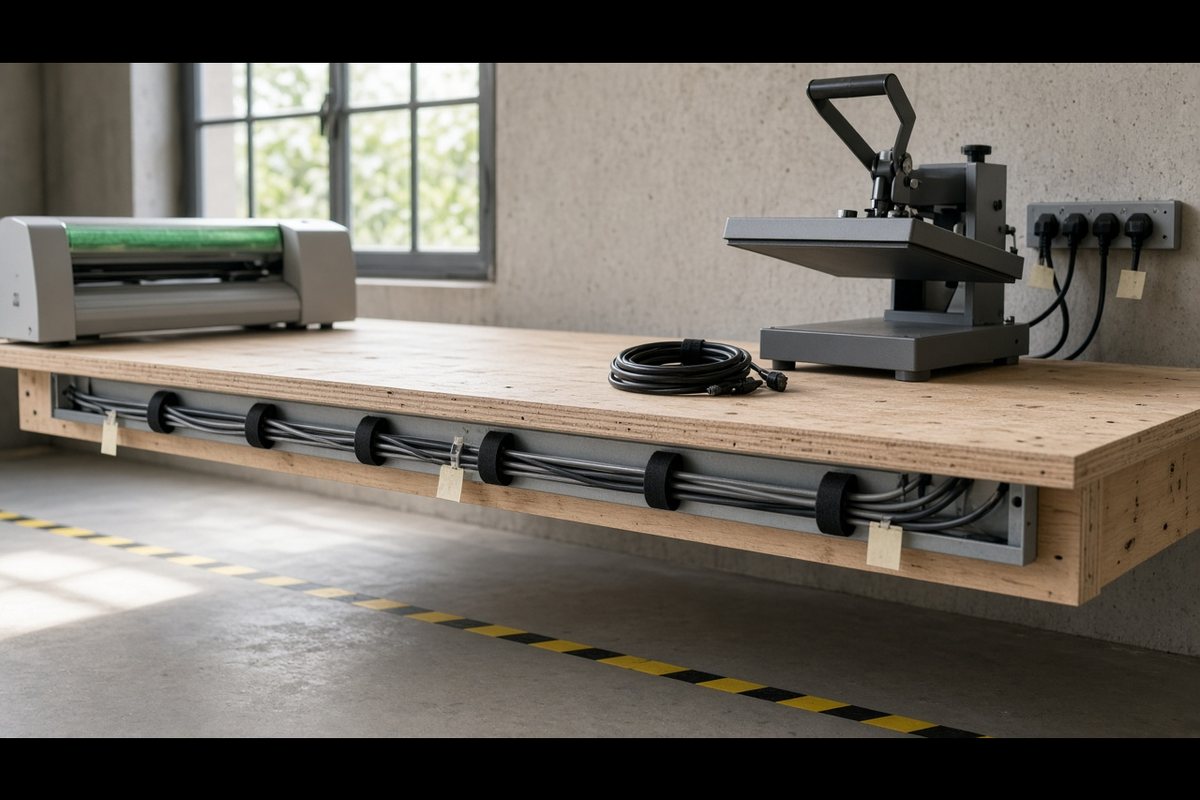
- Run every lead along the back edge of the bench, never across the front lip.
- Fully unroll an extension reel if it has to be used at all, a wound reel holds heat.
- Label each plug at the strip end with a strip of masking tape, so a reset after an outage takes seconds.
Trays, Straps and a Proper Strip
The fix is cheap. A steel cable tray screwed under the back lip of the bench, a pack of hook and loop straps, and one decent surge protected multi-plug strip mounted on the wall or under the bench top. That is usually less than a single roll of good transfer tape costs over a month. Straps beat cable ties because you will move things, and cutting ties every time you swap a machine gets old fast.
Mount the strip high enough that offcuts and dust dont pile up around it. In Highveld workshops the fine winter dust settles into anything at floor level, and on the coast the damp finds its way into a strip that lives on concrete. A strip at bench height also means you can see the switch, which matters more than people think when the lights come back on.
Load-Shedding Restarts Without the Surge
When power drops and comes back, every machine that was switched on tries to start at once. That spike is hard on cheap strips and it is hard on the cutter board. Our habit on stations we set up is simple, when the power goes, switch the machines off at the strip. When it is back, wait a minute, then bring them on one at a time, laptop first, cutter next, press last because it pulls the most.
If the shop runs an inverter or a small UPS, check what is actually on the backed up circuit. A heat press on an inverter meant for lights and a router will trip it or flatten the battery in minutes. Keep the press on mains only and put the laptop and cutter on the backup, so a job in progress can at least be saved and parked.
Keep the Electrician in the Loop
If a bench genuinely needs more sockets, that is a job for a registered electrician, not another adaptor. Adding a proper circuit keeps the Certificate of Compliance on the building valid, and landlords in trade parks around Germiston and Randburg do ask for it when a lease comes up for renewal. Ask the electrician to check the earth leakage trips on the same visit, it takes ten minutes and saves arguments later.
A tidy cable run will never be the exciting part of a new station. But it is the part that lets the rest of the kit work every day without someone tripping, a plug melting or a job getting lost because a lead got yanked. Get it right once and you basically never think about it again.
Email the ByThis shortlist team
Write to pick@bythis.co.za with the showroom city and the kit family you want to see on the bench.