
Briefs
Bits that survive softwood
Starter bit care for softwood and ply.
Problem: Why bits fail in softwood shops
South African joinery, signage, and shopfitting crews use a lot of softwood and ply for fitouts, especially on fast turnaround work in malls from Menlyn to Gateway. On paper, soft board seems easy to cut, but quick bit wear and jammed extractors catch out first-year teams. Most failures aren’t from dodgy imports alone. It’s the Highveld dust, mixed hardwoods in some ply, and the stop-start conditions during power cuts that eat into edge life. On a typical Germiston bench, bits for routers and CNCs see daily use on bulk pine and cheap ply, which means the sharp edge matters more than shiny coatings.
Concrete risks from real floors
Whether you’re cutting 16mm pine for mall kiosks or sheeting up ply for FET college furniture, softwood puts two unexpected stresses on bits. First, factory edge grit, local boards arrive with silica or mineral dust from saws. Second, mixed panel resins or glues act as hidden abrasives, turning a new bit into a drag in a single afternoon. Your floor crew out at a coastal yard in PE will see even more corrosion risk if bits get left damp, so regular wipe-downs after each job are non-negotiable.
Care method: What works in SA workshops
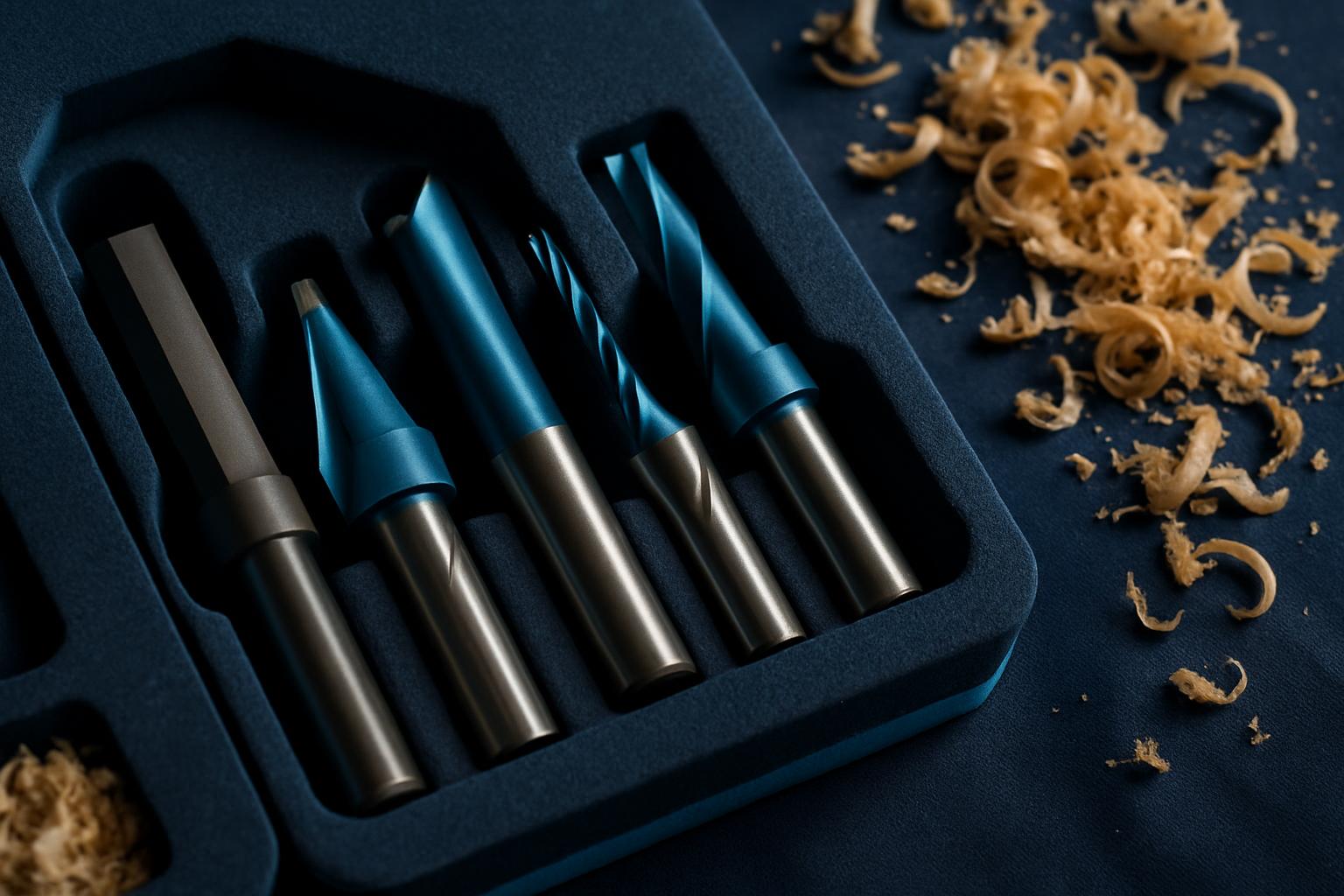
Care routines are basic but must be consistent. Every morning, check each bit for chips, nicks, or resin buildup under good light. Use a brass brush, not steel, to avoid scratching. For stuck-on glue, a bit of acetone on a rag works best, but make sure to let it dry before fitting. Keep bits in a tray lined with foam or corrugated card to stop rolling damage, we've seen far too many bits get a flat spot from being tossed on the counter at the end of shift. For mobile teams or site work at Riverside or Tyger Valley, a Pack and Ship Kit with labelled slots helps prevent losses from bench to bakkie.
What to record on your bench
Most plant buyers skip record-keeping, but it’s what lets you spot patterns. Log every bit’s first use date, material cut each shift, and any signs of damage, a simple notebook in the bench drawer is fine. Note power-cut stops, because bits can cool uneven and the temp shock leads to micro cracks. This helps when you email a brief through our contact form for a quote, our Sunnyrock team looks for these details to recommend the right shortlist for your actual job, not just a general pack.
Worked example: Pine kiosks, Menlyn install
A Pretoria fabrication team installed twenty pine kiosks for a tech expo at Menlyn. They started each shift with a bit check, wiped off each visible particle with a brass brush, and swapped out one bit after six hours when a nick showed up, recorded it in a notebook. At the end, every bit was back in the foam-lined tray. Parts arrived from Sunnyrock on Monday, with a matching Pack and Ship Kit so nothing got lost in the bakkie. The crew emailed a usage report to plant buyers for the next order, cutting out the guessing next time.
Ask Sunnyrock for a shortlist
Name the job on the floor and the city. We answer from Germiston with vinyl, laser, CNC or DTF picks that fit.